CHERI JAMISON
  • Home
  • Work
  • Thoughts
  • Music
  • Contact

What Actually Sustains Arts Organizations Right Now (and What Doesn’t)

4/16/2026

Comments

 
Picture
Image generated with AI to reflect the themes of this piece.

After my time leading Alberta Abbey, I’ve been taking a step back to reflect on what it actually takes to sustain an arts organization right now. Not in theory, but in practice.

There’s no shortage of passion, talent, or vision in this field. What’s harder to come by is stability.

What became clear to me is this: many arts organizations aren’t struggling because of a lack of effort, creativity, or commitment. They’re struggling because they’re operating within business models that were never designed to be stable in the first place.

Once I saw that, it reframed how I understood nearly every challenge we were facing.

Grants are not a strategy. They are inherently unstable.
Finding funding for the arts has always been difficult. While I believe deeply that arts and culture are vital infrastructure for healthy, connected cities, they are still widely treated as a “nice to have.”

At Alberta Abbey, grants were our primary source of contributed income. I spent roughly 30 to 50 percent of my time each week working on them. And even then, nothing was guaranteed.

When federal funding cuts hit, the effects were immediate. The pool shrank, and suddenly arts organizations were competing for the same dollars as nonprofits addressing food insecurity, housing, and other urgent needs. In that environment, arts organizations are at a structural disadvantage.

Even in stronger years, grant funding is unpredictable. You can invest significant time into applications and receive nothing. Or you might have a successful year, only to find yourself ineligible the next. Funder priorities shift. Guidelines change.
​
Individually, these challenges can be explained away. But taken together, they point to something larger. Grants are not a stable foundation for long-term sustainability. They were never designed to be.

Earned revenue helps. But it is not fully within your control.
We were fortunate to have relatively strong earned revenue streams. We offered office space, performance space, and production services. Our bar generated the highest margin and helped subsidize the rest.

But even that stability was conditional.

Our primary clients were other nonprofits. If they didn’t receive funding, they couldn’t afford our services. Revenue that appeared “earned” was still indirectly tied to the same fragile funding ecosystem.

Diversifying revenue is often presented as the solution. And it can help. But diversification alone does not create stability if each revenue stream is subject to the same external pressures.

The underlying issue remains. Much of the revenue arts organizations rely on is not fully within their control.

Infrastructure is under built, but expected to carry everything
I knew going into the role that operations mattered. What became undeniable is that they are the foundation everything else depends on.

Systems, staffing structures, and pricing models are not secondary concerns. They determine whether an organization can function consistently and grow sustainably.
The challenge is that this work is often under-resourced and deprioritized. It falls into the category of “important, but not urgent,” which means it gets pushed aside in favor of immediate needs.

At the same time, organizations are expected to deliver high-quality programming, expand their reach, and increase revenue.

We are asking organizations to scale without investing in the infrastructure required to support that scale. That mismatch creates ongoing instability.

The system relies on unsustainable labor
​In under-resourced environments, there is a strong instinct to do everything internally to save money. I understand that instinct. I operated that way myself at times.

But it comes at a cost.

When leadership is pulled into operational gaps, it limits the organization’s ability to think strategically, build partnerships, and generate revenue. I found myself covering shifts, troubleshooting last-minute staffing issues, and stepping into roles that were necessary but not the best use of my time as an executive director.
One of the most impactful changes we made was partnering with a staffing agency to handle front-of-house coverage. It reduced stress, increased reliability, and freed up capacity for higher-level work.

That shift made something very clear. What often looks like cost-saving is actually inefficiency. And more broadly, the system relies on people overextending themselves to keep things running.

Burnout in the arts is often framed as an individual issue. In my experience, it is structural.

People are the most important investment
If there is a through line in what actually helps organizations function, it comes back to people.

Creating clarity, accountability, and a sense of purpose for staff is not just good leadership. It is operationally essential. When people understand their roles and feel supported in them, everything works better.

At the same time, being a place of public gathering carries real responsibility. We worked to ensure that our space felt safe, welcoming, and professionally run, even in challenging situations. That level of care requires intention and resources.
And as leaders, we have to include ourselves in this equation. The pressure to carry more, to push through, and to make it work at all costs is deeply embedded in this field. But sacrificing your health is not a sustainable strategy.

If the system depends on people constantly overextending themselves, it is not a sustainable system.

What I’d do differently
It is difficult to separate hindsight from context. I stepped into an organization with existing challenges and did the best I could with the information and resources available at the time.

That said, I would move more quickly to invest in capacity-building solutions.
Partnering with a staffing agency earlier would have saved significant time and stress. I also would have considered bringing on additional management support sooner to take on day-to-day operations and create more space for strategic leadership and revenue development.

In resource-constrained environments, these decisions can feel risky. But not making them carries its own cost. Delaying investment in capacity often reinforces the very instability you are trying to solve.

What I’m focused on now
This experience clarified where I want to focus my work moving forward.

Alongside continuing to do consulting work with arts and cultural organizations, I am increasingly interested in ecosystem-level solutions. Work that looks beyond individual organizations and addresses the broader conditions in which they operate.

Through my volunteer role as Co-Chair of MusicOregon’s Music Advocacy Council, I am engaging in efforts that many leaders simply do not have the capacity to take on. Most are already stretched thin managing day-to-day operations within these constraints.

At the same time, the environment is shifting rapidly. Audience behavior has changed. The attention economy has reshaped how people engage with live experiences. Emerging technologies, including AI, are likely to introduce further disruption.

Arts organizations are navigating all of this while operating within business models that were already unstable.

Looking ahead
If we want arts organizations to be sustainable, we cannot simply ask them to work harder or be more creative within the same constraints.
We have to examine the structures themselves.

Because right now, we are asking organizations to build long-term stability on top of short-term, unpredictable, and often misaligned funding systems.
And until that changes, sustainability will continue to be the exception rather than the norm.

These are the questions I’m continuing to explore in my consulting work and in conversation with others across the field. If you’re thinking about these challenges too, I’d welcome the chance to connect.

Note on process: This article is based on my direct experience and perspective.
​I used AI tools to help refine the writing and generate the accompanying image.
Comments

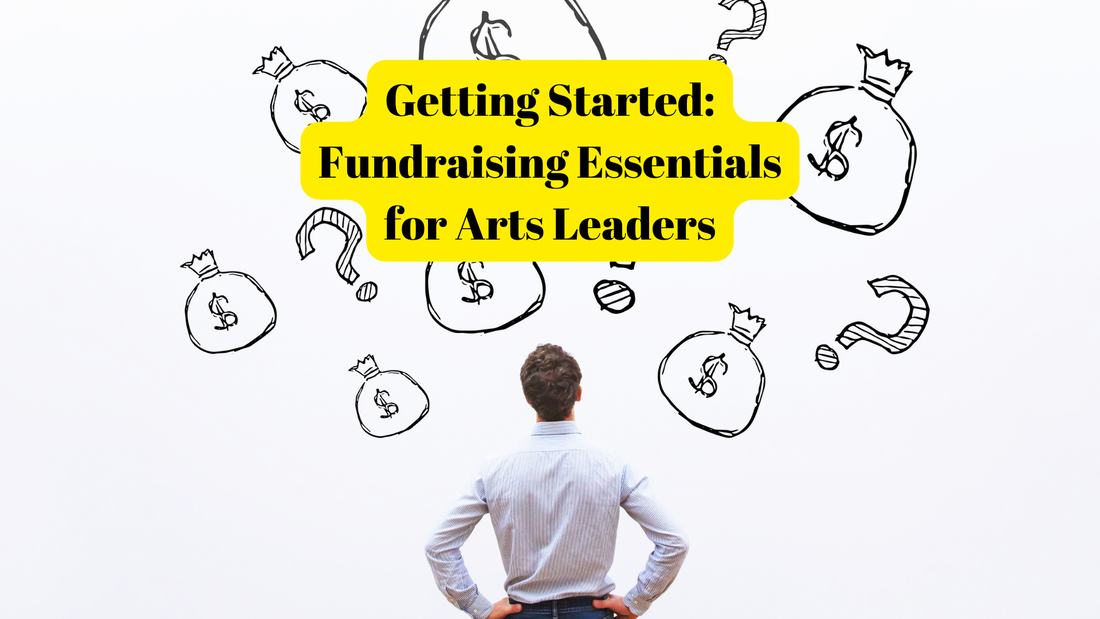
Getting Started: Fundraising Essentials for Arts Leaders

12/15/2023

 
Picture
Are you an artist-turned-executive-director? Is fundraising top of mind, but you don’t know where to start? Keep reading.

I meet artists all the time who take on leadership roles, sometimes willingly, sometimes reluctantly. It feels like in order to do the thing you love (whether it’s performing or bringing your artistic vision to life) someone’s got to handle the admin or business side and you’ve stepped up. 

Most of the time, that role boils down to: Where am I going to find the money? 

For this article on fundraising, I collaborated with my colleague Brian Williams, a nonprofit fundraising consultant, who has specific expertise in the arts. (We met serving on the board of the Arts Council of Johnson County in 2017.) I love Brian’s calmness and down-to-earth approach that takes a lot of the scary out of fundraising.


What are your recommendations for new arts leaders to set themselves up for success in fundraising?


In the realm of fundraising, regardless of the organization's age or size, fostering a culture of philanthropy is paramount. This principle, coupled with a strategic approach to board development, community engagement, and innovative fundraising, can set the stage for sustained success. Here's a guide for new founders and executive directors seeking to elevate their arts nonprofit in a thoughtful, strategic way.


Embrace a Culture of Philanthropy:
What does it mean to instill a culture of philanthropy within your team and stakeholders? In a nutshell, it means that everyone is empowered as an ambassador for your organization. Whether they have an official fundraising role (like EDs, development staff, and board members) or not, emphasize the importance of collective efforts in advancing the organization's mission. This mindset should permeate every aspect of the organization, from leadership to daily operations.


Build a Diverse and Passionate Board:
First things first. You’ve got to get a core group of the right people around you. When assembling your board, prioritize diversity, passion for your cause, and community connections. A diverse board brings varied perspectives and experiences, enriching the decision-making process and can make fundraising easier. Be transparent with board members that they are expected to fundraise. This could look like a give/get policy and working with them to develop a realistic fundraising plan. 


Implement a Working Board Model:
In other words, put your board members to work! In the startup phase, acknowledge that one person cannot do it all. Opt for a working board that actively participates in daily operations while steering the organization's direction. Again, communicate this dual role clearly to prospective board members, ensuring a shared understanding of their involvement in both the hands-on work and strategic decision-making.


Engage Your Innermost Circle:
Once you have your core people, tap into the support of your innermost circle—friends, family, colleagues, and those committed to your cause—to start spreading the word about your organization. Leverage their passion and connections to add people to your email list/CRM, which will be an important part of your fundraising efforts. Clearly articulate your mission and the impact you aim to achieve, compelling them to become ambassadors for your cause. Fundraising is a long-game that requires intentional relationship-building.


Foster Community Connections:
Forge meaningful partnerships with other arts organizations, artists, and cultural institutions to strengthen your community ties. Collaborative initiatives not only broaden your network of potential supporters but also amplify your organization's impact. Engage in local events, attend community gatherings, and showcase the transformative power of the arts to connect with a wider audience.


Utilize Crowdfunding Platforms:
Explore crowdfunding platforms like GoFundMe or Facebook's fundraising tool to amplify your reach. Crowdfunding enables you to showcase your cause on a large scale, appealing to potentially millions of individuals and organizations to contribute. Craft a compelling narrative on your website, sharing your mission, vision, goals, and relevant information to inspire support.


Conclusion:
By integrating these recommendations into your approach, you're not only fostering a culture of philanthropy within your organization but also laying a robust foundation for fundraising success. A diverse and passionate board, coupled with engagement strategies targeting your innermost circle and leveraging crowdfunding platforms, will propel your arts nonprofit toward sustained growth and impact.


Get Support: 
Want help building your board or creating a fundraising plan? Reach out to Brian for a complimentary 30-minute consultation. 

And if you’re an artist just stepping into the world of arts leadership – Arts Consultant Cheri Jamison can help you get oriented, supported, and learn to “fly the plane while it’s in the air.” There are tons of free resources and support available. Let’s have a coffee over Zoom to chat about it (free of charge).

Article collaboratively written by Cheri Jamison Consulting and Brian Williams, Dandelion Consulting.

Brian Williams created Dandelion Consulting with the purpose of “Cultivating Nonprofits for Sustainability.'' He has been fundraising for the nonprofit sector since 2003. His career spans large and small organizations supporting the arts, HIV, and houselessness. His experience includes: major donors, writing plans for annual development and donor stewardship, grant writing, appeals. He also does a Culture of Philanthropy Training for board and staff. dandelionconsulting.co

Cheri Jamison is an Arts Consultant with over 12 years of experience in the arts and nonprofits. Cultivating a non-judgmental, solution-oriented environment, Cheri meets her clients wherever they’re at with their business or creative career. The focus of Cheri Jamison Consulting LLC is strengthening organizations from the inside out through capacity-building, executive coaching, board training, and professional development. CheriJamison.com

    Author

    Cheri Jamison is an arts and nonprofit consultant who helps cultural organizations, creative leaders, and community partners strengthen organizational health, funding readiness, and long-term sustainability.

    Working at the intersection of nonprofit practice, municipal cultural funding, and creative economy strategy, she translates complex systems into clear, actionable approaches.

    ​With experience spanning nonprofit leadership, public cultural funding systems, and cross-sector collaboration, she supports clients with strategy, fundraising readiness, operational planning, and organizational development, bringing both on-the-ground experience and policy insight to help organizations align internal systems with external opportunities and community impact.​www.CheriJamison.com

    Categories

    All
    Board Members
    Fundraising
    Marketing
    Mindset
    Music Business
    Music Cities
    Nonprofit
    Operations

    RSS Feed

CONNECT​
[email protected]

​QUICK LINKS
HOME
WORK
BLOG
CONTACT

​
Photography by Ben Reed Studios and Paul Emerson.  This site uses Google Analytics.
STAY CONNECTED
Each "moments to share" monthly email is like grabbing a warm mug of coffee together at a cozy cafe. We'll catch up with my latest adventures, thoughtful reflections, and articles on how to navigate the Arts & Culture industry.


Privacy Policy:  I value your time and privacy.  Unsubscribe any time.
© Cheri Jamison Consulting LLC 2026.  All rights reserved. ​
  • Home
  • Work
  • Thoughts
  • Music
  • Contact