Streamlining Success: How Systematizing Operations Leads to Financial Stability in Arts Nonprofits7/11/2024
 In the vibrant and often unpredictable world of arts nonprofits, achieving financial stability can feel like a herculean task. Leaders are continually balancing creative aspirations with fiscal realities, a dance that requires both vision and pragmatism. One of the most effective strategies for securing financial health is focusing on operations and systematizing organizational processes. Here’s how this approach can transform your arts nonprofit into a model of efficiency and financial resilience. The Foundation of Stability: Why Operations Matter At the heart of any successful organization lies a robust operational framework. For arts nonprofits, which juggle multiple projects, stakeholders, and funding sources, having streamlined operations ensures that every aspect of the organization runs smoothly and efficiently. This foundation is critical for several reasons: 1. Consistency in Execution: Systematized operations mean that every task, from fundraising to event planning, follows a set protocol. This consistency reduces errors, increases efficiency, and ensures high-quality outcomes. While I know this sounds boring to creative minds, in my experience, it actually allows for more creativity. Having solid systems and organizational framework makes people feel safer and frees up energy to take creative risks in the appropriate channels, like onstage! 2. Resource Optimization: Well-defined systems allow for optimal use of resources, both human and financial. When staff know exactly what steps to follow, time is saved, and efforts are focused on mission-critical activities rather than on figuring out processes. 3. Scalability: As your organization grows, scalable systems are essential. Standardized procedures make it easier to onboard new team members and expand programs without sacrificing quality or efficiency. When it comes to scalability, it helps to think about having “double vision,” keeping an eye on your needs for today, but also the future. Key Areas for Systematization To reap the benefits of systematized operations, focus on these key areas: 1. Financial Management: Develop clear financial policies and procedures. Implementing a robust accounting system ensures accurate tracking of income and expenses, facilitating better budgeting and financial planning. Regular financial reporting and analysis help identify trends and areas for improvement, allowing for proactive management of funds. 2. Fundraising and Development: Create a standardized donor management system. A comprehensive CRM can track donor interactions, manage communications, and streamline fundraising campaigns. Your database tracks your relationships and your relationships are the lifeblood of your organization. Systematizing grant applications and reporting ensures consistency and efficiency, increasing the likelihood of securing funding. Funders want to see that you are responsible and will steward the resources they give you well. 3. Program Delivery: Establish detailed project management frameworks for each program. These should include timelines, roles, and responsibilities, ensuring that all team members are aligned and projects are delivered on time and within budget. Make sure tracking metrics are included in the framework. You’ll thank yourself for this later when you’re writing grant applications to keep those programs funded! 4. Human Resources: Implement standardized hiring, onboarding, and training processes. Clear job descriptions and performance metrics help in recruiting the right talent and fostering a productive work environment. Regular performance reviews and professional development opportunities keep staff engaged and motivated. It’s easy to think in a small organization that HR practices don’t matter, but they actually matter even more. The Financial Payoff Focusing on operations and systematization doesn’t just make your nonprofit more efficient; it also leads directly to financial stability: 1. Cost Savings: Efficient operations reduce waste and redundancy, saving money. For instance, streamlined procurement processes can lower costs, while efficient project management minimizes budget overruns. 2. Increased Funding: Donors and grantmakers are more likely to support organizations that demonstrate sound management and operational efficiency. Transparency and professionalism in operations build trust and credibility. 3. Sustainability: Financial stability is about more than just balancing the books; it’s about building a sustainable future. Systematized operations free up time, resources, and unnecessary mental worry, allowing leadership to focus on strategic planning and long-term growth. Taking the First Steps If your arts nonprofit hasn’t yet prioritized operations and systematization, now is the time to start. Begin with a thorough assessment of your current processes, identify areas for improvement, and develop a plan to implement standardized systems. Engage your team in this process to ensure buy-in and successful adoption. Remember, the goal is not to stifle creativity but to create a stable foundation that supports and enhances your artistic vision. With streamlined operations, your arts nonprofit can achieve greater financial stability, allowing you to focus on what you do best: bringing the transformative power of the arts to your community! Another first step you can take is getting free support in assessing and streamlining your organization's operations: Schedule a free consultation with me today! Cheri Jamison is an Arts Consultant with over 13 years of experience in arts and nonprofit management. Cheri Jamison Consulting LLC focuses on strengthening organizations through capacity-building, executive coaching, board training, and professional development. www.CheriJamison.com
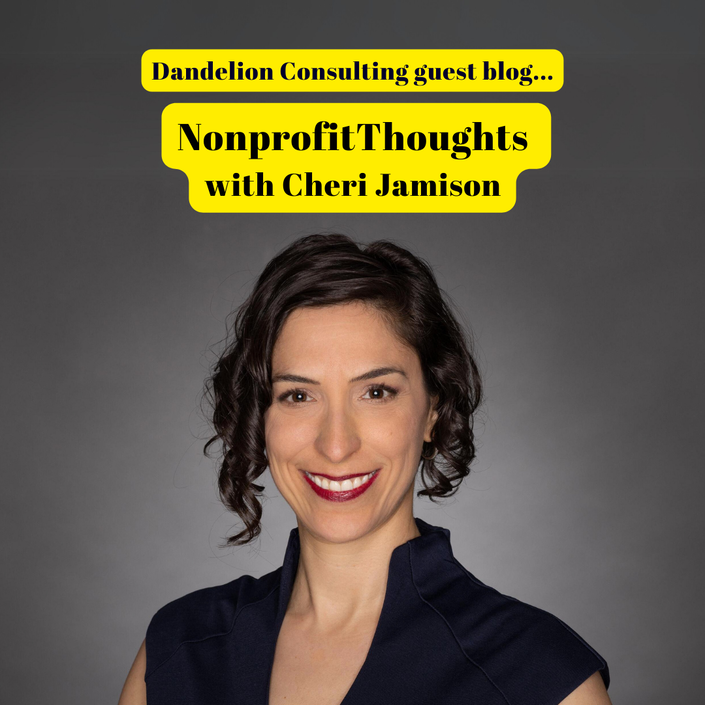 "Nonprofit Thoughts with Cheri Jamison" is an interview post collaboratively written by Cheri Jamison Consulting and Brian Williams, Dandelion Consulting. Originally posted Jan 31, 2024 on the Dandelion Consulting Blog. Brian Williams: I met Cheri Jamison back in 2017 when we served on the board of the Arts Council of Johnson County. My first impression of Cheri was how observant and thoughtful she was. She often had insights that others hadn’t thought about. Cheri brings a diverse skillset to any conversation and I wanted to collaborate with her on an article about working with nonprofits, arts organizations in particular. The lowdown on Cheri Jamison: She is the daughter of a professional violinist and marriage family therapist, so she grew up surrounded by artists and developed a keen interest in human nature. She studied music and psychology in college, and after several years of performing music professionally moved more into the administrative side. She is a passionate advocate for the arts and still finds great joy in singing. She’s always been drawn to the nonprofit sector because of her personal values and desire to serve. Cheri’s career began in Los Angeles when she was recruited by the president of a nonprofit to create their human resources department. She later joined Cadenza Artists, a music agency start-up, as an artist advocate and was promoted multiple times to more senior roles, including Vice President of Operations on the executive team. After pitching an idea for a Performing Arts/Events Center at Unity World Headquarters to the CEO, she was hired as the Outreach Program Manager, where she oversaw partnerships and events for five years. During that time, she was also part of the advisory board of the Arts Council of Johnson County. Cheri started her consulting work with arts and culture organizations primarily when she moved to the Pacific Northwest in 2022. What type of nonprofit consulting do you provide for nonprofits? My passion for the arts, combined with over 12 years of experience in the nonprofit and performing arts sectors, uniquely positions me to support my clients in a variety of ways. Here are some of the ways I support my clients: 🔷 Strategic planning 🔷 Streamlining operations 🔷 Executive coaching 🔷 Board training and development 🔷 Professional development workshops, training, and keynotes 🔷 Event production, including concerts, fundraising galas, and retreats 🔷 Marketing and branding/website redesign 🔷 Market research surveys, music census and economic impact studies 🔷 Creative economy and music policy advocacy 🔷 Advising businesses that hire musicians on best practices 🔷 Career coaching for emerging and established artists and professionals I've worked with nonprofits, for-profit businesses, arts service organizations, higher education, government agencies, and individuals. Because of my diverse professional background and skill set, I offer a wide range of services (often needed by clients who wear many hats in their work), so you get support where you need it most. What is the number one challenge you hear from clients you support? How do you begin to work with them on that challenge? People come to me with all kinds of challenges, but I think at the core, they are asking, “How do I make this work?” often with a fundraising or sustainability flavor to it. A common theme I also hear is that nonprofit leaders feel like they are alone in the room and burned out, trying to “build the plane while flying it.” The first thing I always do is listen. Each situation is unique. Even when I have initial free consultations, I offer resources on how they can start building their support network, whether that’s leveraging their board or finding a local service organization that can connect them to other leaders in their community. Unfortunately, the nonprofit sector has been hit pretty hard with so much burnout and turnover. What advice do you have for nonprofits struggling with this? Limited resources, burnout, and turnover are common in the nonprofit sector. They are valid challenges that deeply impact nonprofit leaders on a physical, mental, and organizational level. Whenever I hear these issues from clients, I dig a little deeper to find out what the underlying causes may be. Here are just a few reasons: Lack of resources—perhaps the organization's budget or fundraising or revenue expectations are unrealistic, and some courageous conversations need to happen with the board. Burnout could be caused by negative self-talk or poor mental health, a lack of boundaries where the leader needs to learn how to say no (but feels guilty about it), needs to empower others, and/or document common operating processes so that tasks can be delegated. Turnover is an especially complex issue because it could stem from a multitude of issues, such as company culture, the wrong people in the wrong roles, management issues, a lack of clear agreements and expectations (or holding people accountable), compensation that doesn’t meet employee needs, etc. We can’t separate the humans involved from the organizational issues. We have to support both. With my master’s degree in psychology, I can help my clients navigate both the inner and outer challenges going on in their nonprofit. It’s hard to step back and reflect on your own organization when you’re in the thick of financial challenges, burnout, or turnover issues, so it’s helpful to have a neutral party like an executive coach or consultant to help talk it through. What advice would you have for someone wanting to start their own nonprofit? I recently wrote an article all about this! While it’s geared towards arts nonprofits, the information is universal to the nonprofit sector: “Should I Start an Arts Nonprofit?” In a nutshell, it’s a personal decision that may or may not be a good fit for you. Also, there are a record number of nonprofits being started every day, so check to see if there are other nonprofits in your local community doing the same thing. Consider joining or supporting an existing nonprofit rather than starting something new. If that service doesn’t exist in your area, then you may have found a needed service for your community! Fiscal sponsorship is an alternative option that’s been very successful in the arts and culture sector, allowing individuals or groups to be sponsored by a more established nonprofit in order to apply for grants and receive tax-deductible donations from supporters. There are a lot of factors to consider, so I encourage introspection and research before applying for 501(c)(3) nonprofit status. Any final nonprofit thoughts for working in the sector as we begin a new year? If you haven’t already, re-engage with your staff and board. Reflect on what you learned last year. What worked and what didn’t? Celebrate wins and share gratitude. Get clear on realistic goals for the upcoming year and how you want to do things differently. Let them know how you want to be supported as a nonprofit leader and listen for what they need as well, then make a plan for how to get that support in place. You got this! Cheri Jamison is an Arts Consultant with over 12 years of experience in the arts and nonprofits. Cultivating a non-judgmental, solution-oriented environment, Cheri meets her clients wherever they’re at with their business or creative career. The focus of Cheri Jamison Consulting LLC is strengthening organizations from the inside out through capacity-building, executive coaching, board training, and professional development. www.CheriJamison.com
Brian Williams created Dandelion Consulting with the purpose of “Cultivating Nonprofits for Sustainability.'' He has been fundraising for the nonprofit sector since 2003. His career spans large and small organizations supporting the arts, HIV, and houselessness. His experience includes: major donors, writing plans for annual development and donor stewardship, grant writing, appeals. He also does a Culture of Philanthropy Training for board and staff. www.dandelionconsulting.co |
AuthorCheri Jamison is an Arts Consultant with over 13 years of experience in arts and nonprofit management. Cheri Jamison Consulting LLC focuses on strengthening organizations through capacity-building, executive coaching, board training, and professional development. www.CheriJamison.com Categories
All
|
 RSS Feed